


“3D printing helps brands turn ideas into physical experiences — faster, more creatively, and without traditional manufacturing limits.”
- ANTHONY

- Jan 20
- 2 min read
1) Product Prototypes for Campaigns
When: A brand wants to tease or launch a product before mass production.
Why it helps: Marketers can photograph, film, or showcase realistic prototypes early.
Example: A baby company prints an oversized bottle for a attention at a convention.

2) Eye-Catching Event Displays
When: Trade shows, pop-ups, experiential activations, brand events.
Why it helps: Large, sculptural, custom shapes draw attention and create “photo moments.”
Example: A 6-foot 3D printed luggage set to draw attention to a QR code activated entry.

3) Custom Props for Photo & Video Shoots
When: Commercials, social media shoots, influencer content.
Why it helps: 3D printing produces props that are lightweight, stylized, or surreal.

4) Personalized Promotional Items
When: VIP mailers, influencer kits, corporate gifts, loyalty campaigns.
Why it helps: Personalized 3D printed objects feel premium and memorable.
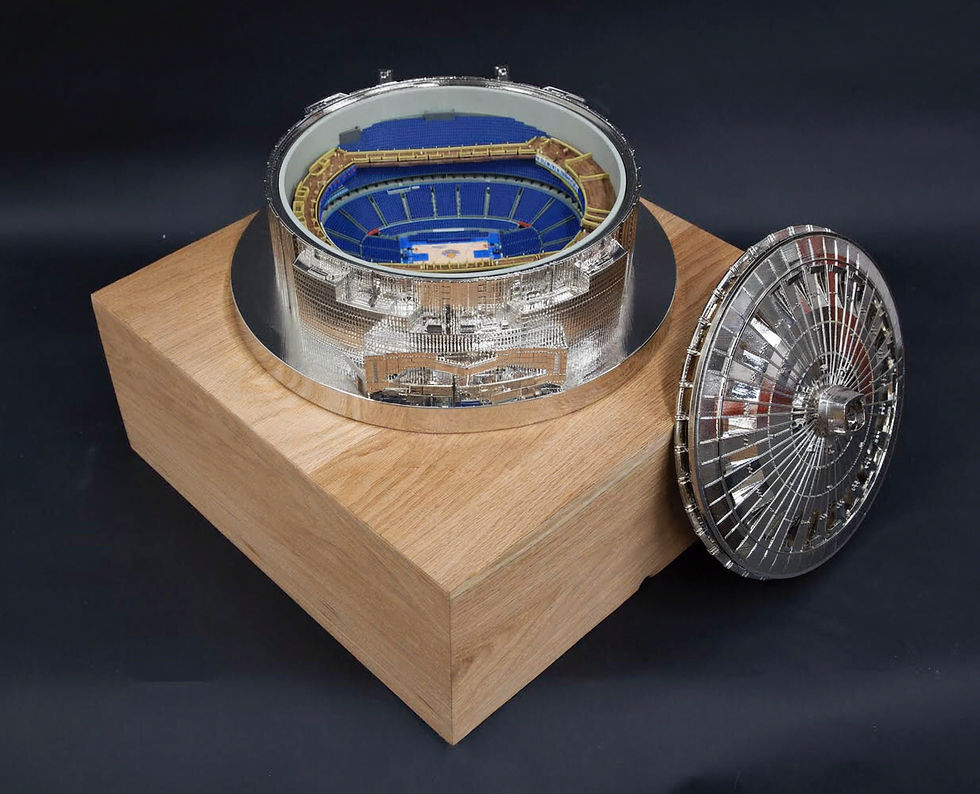
Example: Custom Madison Square Garden miniature replicas made for gifting during recruiting.
5) Packaging Concept Testing
When: Brands want to test shelf appeal before manufacturing tooling.
Why it helps: Rapid iteration of physical packaging concepts.
6) Interactive or Functional Installations
When: Brands want engagement beyond passive viewing.
Why it helps: 3D printed moving parts, tactile displays, or modular builds.
7) Replica Products for Out-of-Home Advertising
When: Billboards, store windows, mall displays.
Why it helps: Large-scale replicas are cheaper and faster than traditional fabrication.
Example: A giant sneaker for a retail storefront.
8) Stop-Motion & Animation Assets
When: Agencies produce stop-motion or stylized animation.
Why it helps: 3D scanned a vintage sculpture and then animated it for digital use.
9) Branded Merchandise with Unique Shapes
When: Giveaways need to stand out from standard swag.
Why it helps: Unusual shapes that tie directly to brand identity.
10) Historical or Conceptual Visualizations
When: A brand tells a story — heritage, innovation, future vision.
Why it helps: Physical storytelling objects reinforce narrative.


Comments